The Nature of Adverse Selection in Electronic Markets
Automated market makers survive by earning the bid ask spread across liquid assets. However providing liquidity carries inherent risk known as adverse selection. Not all market participants trade for liquidity needs. Informed traders enter orders only when they possess superior information about impending price movement.
Why Traditional Time Based Volatility Fails
Traditional risk management models measure price volatility across fixed clock time intervals like five minute or hourly windows. In modern electronic markets this assumption breaks down. Markets operate in transaction time where periods of quiet trading alternate with sudden bursts of thousands of trades.
Measuring risk using fixed clock intervals causes algorithms to underestimate exposure during market crashes or aggressive institutional liquidations. A robust risk metric must synchronize directly with trading volume.
The Mechanics of Volume Bucketing in VPIN
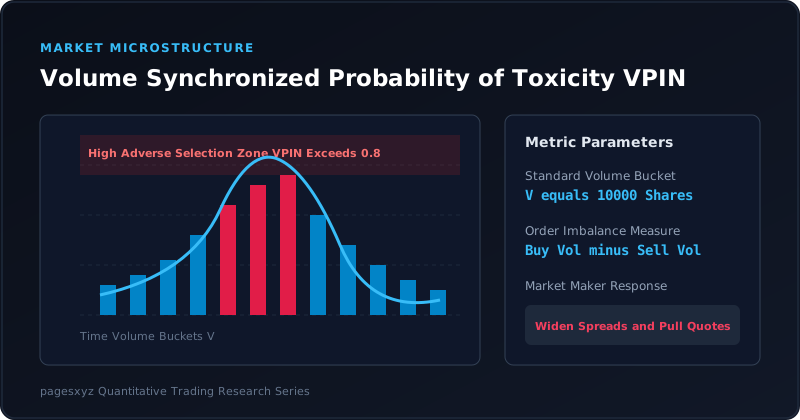
Volume Synchronized Probability of Toxicity or VPIN addresses this flaw by dividing order flow into fixed volume buckets instead of clock time. A volume bucket fills when a predetermined number of shares or contracts execute across the exchange limit order book.
For each volume bucket the algorithm estimates trade direction by classifying buyer initiated and seller initiated volume. The absolute order imbalance between buyer and seller volume reveals the concentration of informed trading activity.
How Market Makers React to Toxic Order Flow
When VPIN readings exceed normal historical thresholds the market maker detects incoming adverse selection. Informed counterparties are aggressively consuming posted liquidity on one side of the book.
Automated quoting engines respond in milliseconds by widening quoted spreads skewing pricing towards the informed direction or pulling passive quotes entirely. This automated self defense preserves capital during sharp market dislocations.
Implementation Insights for Quantitative Desks
Implementing VPIN in high frequency production requires streaming tick processing engines capable of millisecond volume aggregations. Desks that successfully integrate volume synchronized metrics protect their trading books while maintaining high profitability across choppy market conditions.