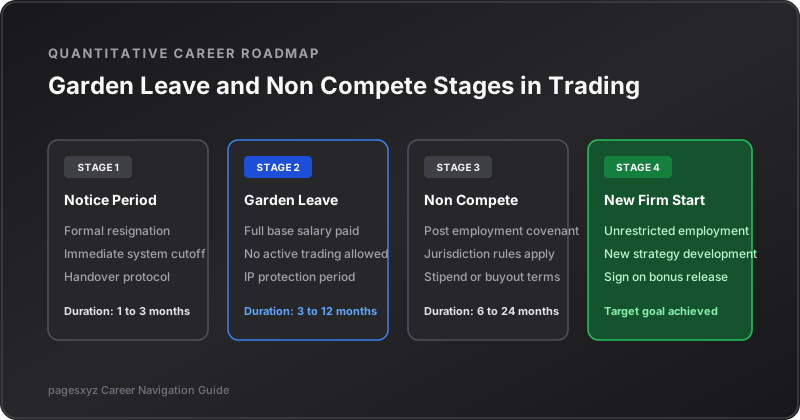
Why the Trading Industry Enforces Strict Restrictive Covenants
Quantitative trading firms invest immense resources into developing proprietary mathematical models trading software and execution hardware. Because key algorithmic strategies can be replicated by experienced personnel firms protect their intellectual property through aggressive restrictive covenants. Anyone working as a quantitative researcher trader or software engineer in this industry must understand these contractual terms.
The Difference Between Notice Period and Garden Leave
Employment agreements in systematic trading typically contain three distinct phases when an employee departs. The first phase is the contractual notice period which typically lasts between thirty and ninety days. During notice the firm decides whether to keep the employee active or place them on immediate garden leave.
Garden leave is a formal employment status where the employee remains on the payroll but ceases all active trading duties. The firm immediately revokes access to internal repositories databases and communication systems. The key benefit for the departing employee is that full base salary continues throughout the duration of garden leave.
Post Employment Non Compete Covenants and Compensation
A non compete restriction is distinct from garden leave. A non compete covenant applies after formal employment has ended. Non compete periods range from three months for junior developers to two years for senior portfolio managers. In many jurisdictions non compete restrictions are enforceable only if the former employer continues paying a substantial monthly stipend.
What You Can and Cannot Do While Sitting Out
Professionals sitting out on garden leave must exercise caution regarding their daily activities. You cannot provide consulting services to competing trading firms. You cannot actively recruit former colleagues or establish a competing hedge fund entity. Many practitioners use this downtime to travel learn new mathematical disciplines contribute to open source software and prepare for their upcoming role.
Negotiating Terms Before Accepting an Offer
Negotiating restrictive covenants is easiest when accepting an initial offer. Candidates should always examine the exact scope of the non compete clause. A well drafted clause restricts only specific asset classes or strategies rather than banning general employment across the entire financial technology sector.
How Future Employers Handle Garden Leave Buyouts
Prospective employers regularly offer sign on bonuses and buyouts to compensate top talent during long non compete periods. Understanding your contractual rights ensures a smooth career transition while keeping your professional reputation intact.