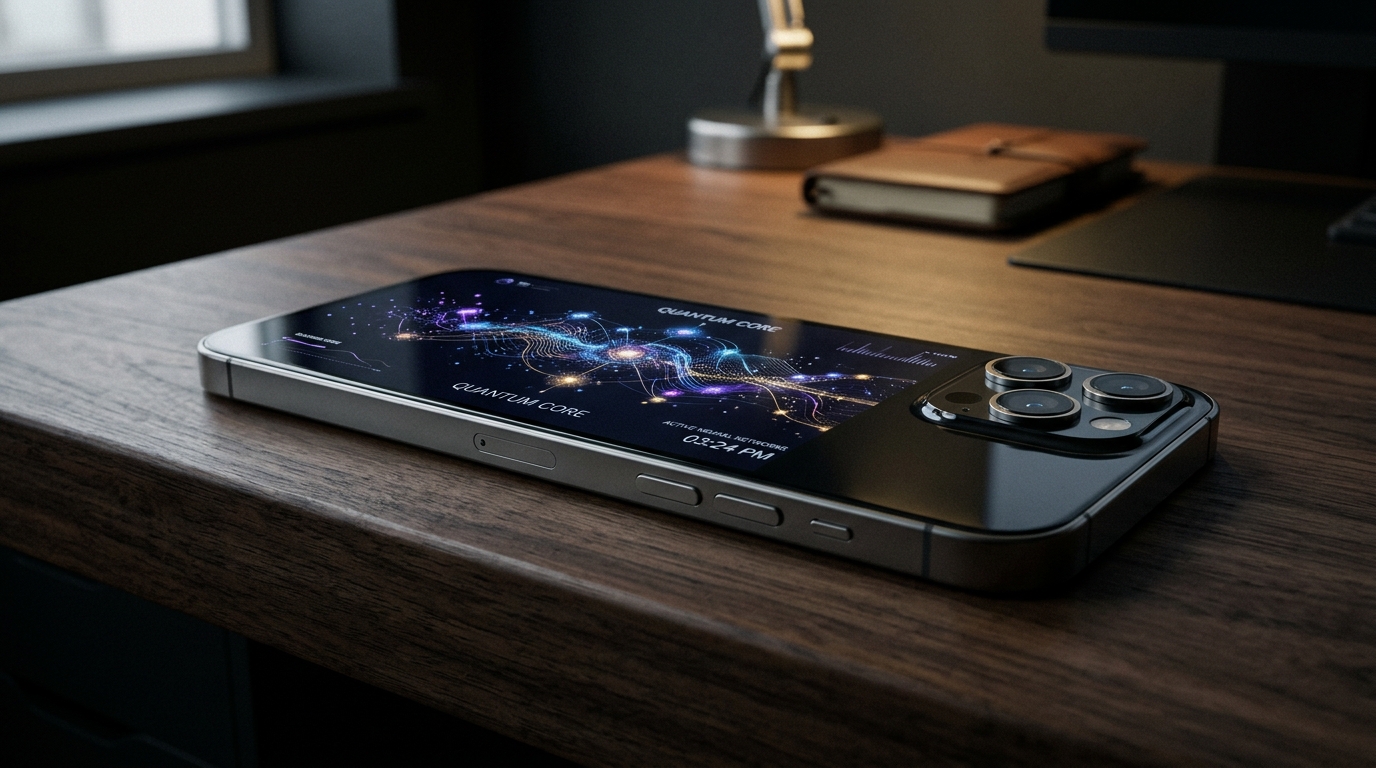
Most smartphone users view their device as an interactive screen for messaging, social media, photography, and navigation. In reality, modern smartphones are the most sophisticated, sensor-dense telemetry probes ever constructed in human history. At any given second, your device is quietly recording, measuring, and computing hundreds of environmental and behavioral signals.
With modern chipsets featuring dedicated Neural Processing Units (NPUs) capable of executing over 40 trillion operations per second (TOPS), your smartphone no longer needs to upload all your data to the cloud to analyze you. It processes your behavioral patterns locally, in real time. Here is an architectural breakdown of how your smartphone builds a comprehensive cognitive model of your daily life.
1. The Hardware Sensory Array
A flagship smartphone carries between 15 and 25 hardware sensors, sampling data hundreds of times every second:
- 3-Axis Accelerometer & Gyroscope: Measures linear acceleration, tilt, and rotational velocity. This does not merely count steps—it measures the cadence of your gait, subtle hand tremors, and whether you are standing, sitting, driving, or riding a subway.
- Barometric Pressure Sensor: Detects micro-atmospheric pressure fluctuations with enough sensitivity to determine which floor of a building you are on or whether an elevator is ascending.
- Ambient Light Sensor & Proximity Detector: Determines whether the device is in a pocket, a dark bedroom, or direct sunlight.
- Multi-Constellation GNSS Receiver: Tracks GPS, GLONASS, Galileo, BeiDou, and QZSS satellite signals down to centimeter-level positioning.
- Dual-Band Wi-Fi and Bluetooth Low Energy (BLE): Constantly scans nearby radio beacons and MAC addresses, constructing an indoor positioning map even when GPS is turned off.
- Capacitive Touchscreen Digitizer: Samples finger contact area, capacitive velocity, and micro-delays between keystrokes.
2. Behavioral Biometrics: Your Unique Digital Fingerprint
While fingerprint scanners and facial recognition (Face ID) provide explicit biometric authentication, modern operating systems continuously run Passive Behavioral Biometrics:
Keystroke Dynamics and Typing Rhythm
The exact timing between your key presses (flight time) and how long your thumb remains in contact with the glass (dwell time) forms an individual biometric signature as unique as handwriting. Machine learning models can identify whether the legitimate owner or an unauthorized individual is holding the phone with over 98% accuracy.
Gait Analysis and Motion Telemetry
When your phone sits in your pocket as you walk, the accelerometer logs your acceleration curve. Your stride length, heel-strike intensity, and hip swing create a kinetic signature. Research demonstrates that gait telemetry can detect early signs of physical exhaustion, intoxication, or emerging neurological changes.
Sensor and Inference Mapping Matrix
| Hardware Sensor | Raw Telemetry Captured | Inferred Behavioral Intelligence |
|---|---|---|
| Accelerometer + Gyro | XYZ gravitational vector (100 Hz) | Walking, running, vehicular travel, pocket vs table placement |
| Barometer | Atmospheric pressure (hPa) | Elevator transit, architectural floor elevation, weather changes |
| Bluetooth BLE Scanner | Nearby UUID beacons & RSSI signal | Physical proximity to friends/coworkers, retail aisle tracking |
| Touch Digitizer | Dwell time, flight time, tap force | User emotional agitation, fatigue, cognitive distraction |
| Microphone (Audio DSP) | Always-on keyword audio buffer | Ambient acoustic environment (restaurant, highway, bedroom) |
3. Circadian Modeling and Sleep Inference
Your smartphone knows when you fall asleep and wake up with precision rivaling specialized medical polysomnography equipment, without you wearing a smartwatch. It combines:
- The exact timestamp of your final lock screen tap before midnight.
- The ambient light sensor registering zero lux.
- The accelerometer logging near-zero motion for six hours.
- The connection to your home Wi-Fi network and overnight charging telemetry.
When your alarm sounds, your device already knows if you woke up groggy or alert based on how fast you interacted with the dismiss button.
4. The Local NPU Revolution: Privacy or Deep Profiling?
Historically, capturing rich telemetry raised severe privacy concerns because sending continuous sensor streams to cloud servers consumed battery bandwidth and exposed sensitive personal data. Modern operating systems (Apple iOS with Neural Engine, Google Android with Private Compute Core) have largely shifted behavioral inference on-device.
Your device trains local federated learning models that never transmit raw audio, GPS points, or photos to company servers. Instead, only encrypted mathematical model weights are synced. While this protects you from external eavesdroppers, the device itself possesses an intimate, holistic psychological and physical understanding of your life.
5. How to Reclaim Digital Autonomy
If you wish to reduce the granularity of ambient device profiling, consider these practical steps:
- Audit Background Location Services: Change app location permissions from "Always Allow" to "While Using App" or "Ask Next Time".
- Disable Precise Location for Non-Navigation Apps: Social networks, weather apps, and retailers do not need 1-meter GPS accuracy; proximate city-level coordinates suffice.
- Turn Off Bluetooth and Wi-Fi Scanning: In system settings, prevent background radio hardware from scanning beacon networks when Wi-Fi is toggled off.
- Review App Tracking Transparency (ATT): Disallow third-party advertising identifiers from aggregating cross-app usage telemetry.
Frequently Asked Questions (FAQ)
Does my phone actually listen to my conversations for ads?
Extensive security audits and network packet captures have consistently proven that smartphones do not continuously record and stream raw microphone audio to advertising servers—doing so would rapidly deplete battery life and generate gigabytes of outbound cellular data. Instead, advertising networks use location co-presence (if you have dinner with a friend who searched for a product, their interest graph bridges to you via shared BLE and IP addresses), giving the eerie illusion of acoustic eavesdropping.
Can behavioral biometrics be forged or copied?
Unlike passwords or static photos, continuous behavioral biometrics (keystroke cadence, micro-swipes, walking gait) are dynamic neurological responses that are extraordinarily difficult for another human or bot to mimic in real time.